Perched at an astonishing altitude of 3,710 meters (12,171 feet) within the rugged, wind-swept landscapes of the Mustang district, Muktinath is one of the most revered and ancient pilgrimage destinations in the Himalayas. Sitting near the base of the formidable Thorong La mountain pass, this sacred site is a profound symbol of religious harmony, drawing tens of thousands of Hindu and Buddhist devotees, as well as adventure-seeking trekkers, from around the globe every year. The journey to Muktinath is not just a physical transition into the high-altitude desert of the Tibetan Plateau; it is a transformative spiritual expedition that blends deep faith with some of the most striking, desolate natural beauty on Earth.
For Hindus, the site is known as Mukti Kshetra, which translates to the “Place of Liberation.” Ancient scriptures dictate that visiting this shrine and bathing in its holy waters will cleanse a devotee of all earthly sins, breaking the cycle of reincarnation and granting ultimate salvation. The primary deity worshipped here is Lord Vishnu. Conversely, Tibetan Buddhists revere the site as Chumig Gyatsa, meaning the “Place of a Hundred Waters.” For Buddhists, it is an essential site of Tantric meditation and a sacred dwelling place of Dakinis—powerful sky-dancing goddesses.
Reaching Muktinath is an adventure that has been dramatically modernized in recent years but has lost none of its rugged charm. Whether travelers choose to take a breathtaking scenic flight through the world’s deepest gorge to the town of Jomsom, brave the rocky, off-road jeep trails winding alongside the Kali Gandaki River, or hike the legendary Annapurna Circuit, arriving at the temple complex is a profound milestone. Surrounded by snow-capped peaks and the vast, barren expanse of upper Mustang, Muktinath offers visitors a rare opportunity to witness ancient devotion thriving in one of the most extreme environments on the planet.
Sights
Map
Info
The Mythological and Cultural Significance The sanctity of Muktinath predates recorded history, deeply intertwined with the mythology of the Himalayas. According to Hindu tradition, Lord Vishnu turned into a Shaligram (a sacred black fossil found exclusively in the nearby Kali Gandaki riverbed) to repent for a curse. Today, finding a Shaligram during the journey to Muktinath is considered incredibly auspicious, and these fossils are worshipped in Hindu households worldwide. The seamless integration of Hinduism and Buddhism at this single geographic coordinate is a testament to the peaceful, syncretic nature of Himalayan spirituality. It is not uncommon to see Hindu priests (Brahmins) and Buddhist monks conducting rituals in close proximity, sharing the sacred space without conflict.
Inside the Temple Complex The Muktinath temple grounds are expansive and feature several critical sites for religious rituals:
-
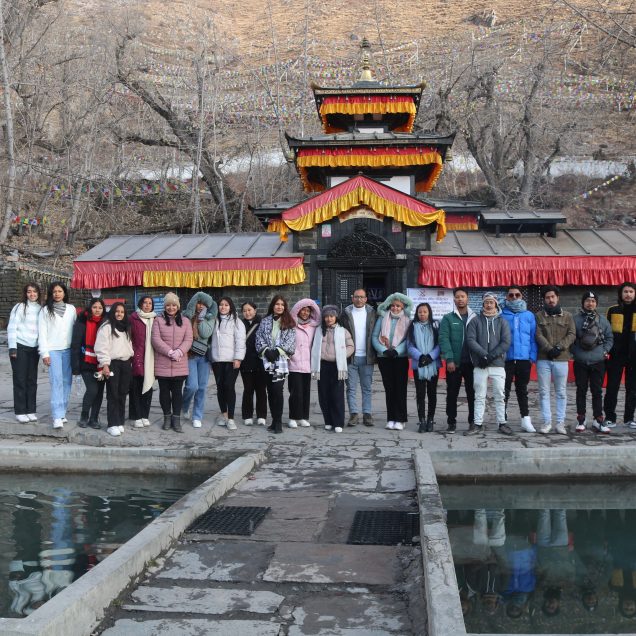
The Main Pagoda: The centerpiece is a small, beautifully crafted three-tiered pagoda-style temple dedicated to Lord Vishnu. Inside the dimly lit sanctum, a life-sized golden statue of the deity is worshipped daily.
-
The 108 Waterspouts (Muktidhara): Arranged in a grand semi-circle along the outer wall of the main temple are 108 stone spouts intricately carved in the shape of bulls’ heads. Ice-cold water, channeled directly from the glaciers of the Kali Gandaki, flows continuously through these spouts. In Hindu astrology, 108 is a highly sacred number. Pilgrims brave the freezing temperatures to walk quickly under all 108 spouts, a ritual believed to wash away all past karmic debts.
-
Mukti Kunda: Situated directly in front of the temple are two sacred water pools. Taking a holy dip here is usually the first step of the purification process before approaching the waterspouts or the main idol.
-
Jwala Mai Temple: A short walk south of the main complex lies a small Tibetan monastery holding one of Muktinath’s most miraculous sights. Inside, an eternal flame fueled by natural subterranean gas burns continuously over a natural spring. This rare convergence of earth, water, and fire in a single spot is viewed as highly sacred by Buddhist practitioners.
The Landscape of the Kali Gandaki Gorge The environment surrounding Muktinath is starkly different from the lush valleys of central Nepal. The temple sits in the rain shadow of the Annapurna and Dhaulagiri mountain ranges, meaning it receives very little rainfall. The result is a high-altitude desert resembling the Tibetan plateau—vast, dry, and painted in brilliant shades of ochre, red, and brown. The journey takes travelers through the Kali Gandaki Gorge, officially recognized as the deepest canyon in the world. The winds howling through this gorge in the late morning and afternoon are legendary, carving dramatic formations into the canyon walls and making the trek both beautiful and challenging.
Travel Logistics and Altitude Preparation Historically, reaching Muktinath required weeks of grueling trekking. Today, the infrastructure allows for quicker access, making the pilgrimage possible for a wider range of ages and physical abilities.
-
By Air and Jeep: The most common route for pilgrims involves taking a short, thrilling 20-minute flight from Pokhara to the airstrip at Jomsom. From Jomsom, local off-road jeeps ferry passengers along a bumpy, dusty road through the medieval-looking village of Kagbeni, climbing steeply up to the temple grounds at Ranipauwa.
-
By Trekking: For adventurers, Muktinath is the sweet reward after crossing the grueling 5,416-meter Thorong La Pass on the Annapurna Circuit trek.
Because Muktinath sits well above 3,500 meters, altitude sickness (Acute Mountain Sickness) is a genuine risk, regardless of whether you trek or drive up. Proper acclimatization is mandatory. Travelers should plan to spend at least one night in a lower town like Jomsom or Kagbeni before ascending to the temple. Hydration, eating light local meals like Dal Bhat, and moving slowly upon arrival are essential to safely enjoying the spiritual gravity of this incredible Himalayan sanctuary.