
Chitwan National Park, a designated UNESCO World Heritage site, is the undisputed crown jewel of wildlife tourism in Nepal. Covering over 932 square kilometers of pristine subtropical lowland, this lush sanctuary provides a dramatic, vibrant contrast to the high-altitude trekking trails of the Himalayas. For wildlife enthusiasts, photographers, and families looking for an accessible adventure, Chitwan is an absolute paradise. The park is world-renowned for its incredibly successful conservation of the Greater One-Horned Rhinoceros; visitors have a remarkably high success rate of spotting these prehistoric-looking giants bathing in the muddy rivers or grazing peacefully in the tall grasslands.
Beyond the rhinos, the jungle holds an incredible diversity of life. It serves as a crucial, protected habitat for the elusive, magnificent Royal Bengal Tiger, herds of wild elephants, elusive leopards, sloth bears, and over 500 distinct species of migratory and resident birds. The rivers that carve through the park are equally alive, heavily populated by two distinct species of crocodiles: the broad-snouted Mugger and the critically endangered, fish-eating Gharial, which can frequently be seen sunbathing on the sandy riverbanks.
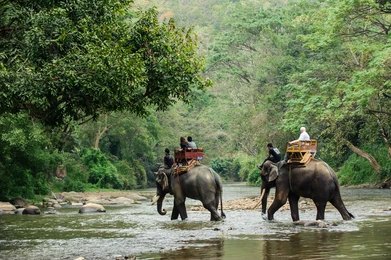
Exploring this vast wilderness is an adventure in itself. Visitors can venture deep into the core zones of the park on guided open-air jeep safaris, allowing for safe, extensive coverage of the tiger territories. For a more intimate, silent approach, traditional wooden dugout canoes offer a peaceful drift down the Rapti River, providing unparalleled bird-watching opportunities and close-up views of the aquatic life. Complementing the thrilling wildlife encounters is the rich cultural immersion into the local Tharu villages. Known as the “Children of the Forest,” the Tharu people offer travelers a fascinating glimpse into their traditional, mud-built homes, unique agricultural practices, and vibrant cultural dances, making a trip to Chitwan a perfectly balanced experience of thrilling nature and authentic local heritage.
Sights
Map
Info
The Ecology of the Terai Plains The environment of Chitwan is a dramatic departure from the rest of Nepal. Situated in the southern Terai belt bordering India, the landscape here is predominantly flat, hot, and incredibly fertile. The ecosystem is a complex, beautiful mosaic of three distinct terrains: dense, towering forests primarily composed of Sal trees (which cover about 70% of the park); twisting, dynamic river systems including the Rapti, Reu, and Narayani rivers; and massive expanses of alluvial grasslands. This specific type of elephant grass can grow up to 8 meters tall, creating a dense, impenetrable sea of green that provides the perfect cover for massive mammals and apex predators alike. The high humidity and monsoon-fed fertility create a hyper-active environment where life flourishes at every single level, from microscopic insects to massive pachyderms.
The Greater One-Horned Rhinoceros and the Bengal Tiger The absolute highlight of a Chitwan safari is the wildlife, specifically its two most famous residents. The park is a global success story for the Greater One-Horned Rhinoceros. Decimated by poaching in the mid-20th century, aggressive conservation efforts have allowed the population to rebound spectacularly, and today, spotting a rhino is almost guaranteed during a multi-day visit. Seeing one of these two-ton beasts emerge from the morning mist is an unforgettable experience. Conversely, spotting the Royal Bengal Tiger requires significantly more patience and luck. These apex predators are incredibly stealthy and solitary, heavily camouflaged within the tall grass and dappled forest light. Jeep safaris often focus on tracking fresh pugmarks (paw prints) and listening for the warning calls of spotted deer and monkeys, which signal a tiger is on the move.
Methods of Jungle Exploration To fully experience Chitwan, visitors must utilize a combination of different safari methods, each offering a unique perspective:
-
Open-Air Jeep Safaris: This is the most popular and efficient way to explore the deep, core areas of the national park. Half-day or full-day jeep tours allow you to cover significant distances, moving through various ecological zones to maximize your chances of spotting a tiger or a sloth bear.
-
Dugout Canoe Rides: A journey down the Rapti River in a narrow, traditional wooden canoe carved from a single tree trunk is a serene, almost meditative experience. Moving silently, it is the absolute best way to photograph aquatic birds, monitor lizards, and the heavily armored crocodiles resting just feet away on the riverbanks.
-
Guided Jungle Walks: For the truly adventurous, walking safaris led by experienced local nature guides offer a massive adrenaline rush. Walking on foot through predator territory requires strict adherence to safety protocols, but it allows for an intimate understanding of the jungle’s micro-ecosystems, tracking animal footprints, and learning about medicinal forest plants.
The Indigenous Tharu Culture The human element of Chitwan is just as fascinating as its wildlife. The indigenous Tharu people have inhabited these malaria-prone jungles for hundreds of years, developing a natural resistance to the disease and an incredibly deep, symbiotic relationship with the forest. A visit to a traditional Tharu village provides a stark contrast to the hill cultures of the Himalayas. Their homes are beautifully constructed from mud, dung, and elephant grass, often decorated with intricate, colorful hand-painted murals. In the evenings, cultural centers in the tourist hub of Sauraha host traditional Tharu dance performances. The most famous is the highly energetic “Danda Nach” (Stick Dance), a rhythmic, martial-arts-style dance originally developed to keep wild animals away from the crops at night.
Travel Logistics and Best Time to Visit Chitwan is highly accessible, serving as a popular triangular circuit alongside Kathmandu and Pokhara. It is a scenic, albeit bumpy, 5 to 7-hour drive from Kathmandu via tourist bus. For those looking to avoid the highway traffic, a quick, 25-minute domestic flight from Kathmandu to the nearby Bharatpur Airport is highly recommended. The absolute best time to visit Chitwan is during the dry winter and spring months, from October to March. During this time, the weather is beautifully sunny and pleasant, and the skies are clear. More importantly, in late January and February, the local villagers are permitted to slash and burn the massive elephant grass. This drastically reduces the jungle cover, making it significantly easier to spot tigers, rhinos, and smaller mammals that are usually hidden in the thick brush.


