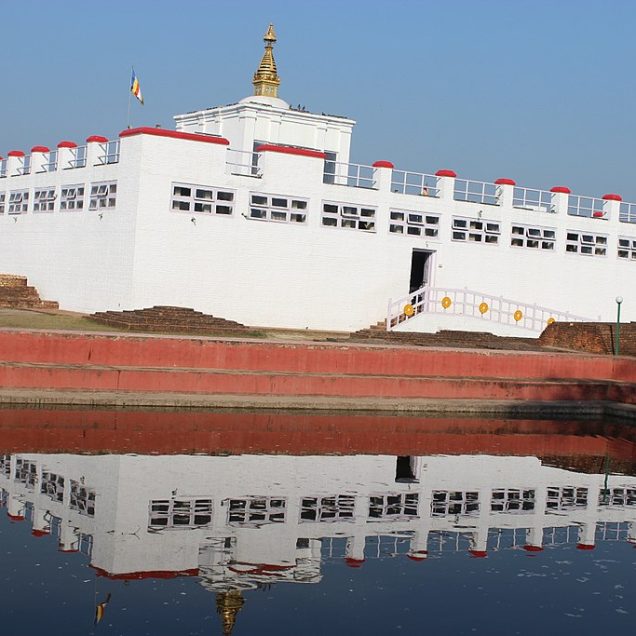
Lumbini is the spiritual epicenter of the Buddhist faith, offering an unparalleled journey into the origins of mindfulness and peace. The absolute core of this massive pilgrimage site is the Sacred Garden, a highly protected, beautifully manicured archaeological zone. Here lies the Maya Devi Temple, a simple, white structure built directly over the excavated ruins of ancient stupas and the precise, verified location where Queen Maya Devi gave birth to Prince Siddhartha in 623 BC. Pilgrims from every corner of the world gather here, walking silently around the ancient brick foundations, meditating beside the sacred Pushkarini pond where the infant prince had his first purification bath, and offering reverence to the famous Ashoka Pillar, erected in 249 BC to mark the birthplace.
Surrounding this ancient, sacred core is the expansive Lumbini Monastic Zone. Designed by renowned Japanese architect Kenzo Tange, this massive, forested area is neatly divided into two distinct realms: the Eastern Monastic Zone, dedicated strictly to Theravada Buddhism, and the Western Monastic Zone, dedicated to Mahayana and Vajrayana Buddhism. Renting a bicycle to explore these zones is a fascinating cultural adventure. Within a few hours, you can admire the towering, golden, bell-shaped pagodas of the Myanmar temple, wander through the serene, perfectly manicured courtyards of the Chinese monastery, and spin the massive, brightly painted prayer wheels at the Tibetan center.
Lumbini is a destination that transcends traditional tourism. It is a sanctuary dedicated to world peace, culminating at the massive, brilliant white World Peace Pagoda situated at the northern end of the complex. The environment is deliberately designed to foster inner reflection, free from the commercial noise found in other major tourist hubs. For travelers exploring Nepal, taking the time to journey down to these southern plains provides a profound, quiet counterbalance to the adrenaline of Himalayan trekking and the bustling intensity of the Kathmandu Valley, leaving visitors with a deep, lingering sense of serenity and spiritual fulfillment.
Sights
Map
Info
The Sacred Garden and the Maya Devi Temple The spiritual and historical heart of Lumbini is the Sacred Garden. The focal point here is the Maya Devi Temple. Unlike the towering, highly decorated monasteries in the surrounding zones, the Maya Devi Temple is a protective, unassuming white building designed strictly to shelter the priceless archaeological ruins beneath it. Inside, visitors walk on elevated wooden boardwalks over the ancient brick foundations of temples dating back to the 3rd century BC. The absolute climax of the visit is viewing the Marker Stone, safely encased in bulletproof glass, which pinpoints the exact spot where Prince Siddhartha was born.
Just outside the temple lies the Pushkarini (Holy Pond), where Queen Maya Devi bathed before giving birth, and where the infant Buddha received his first bath. Towering over the pond is a massive, ancient Bodhi tree, heavily draped in colorful prayer flags, under which monks from various nations sit for hours in deep, silent meditation. Adjacent to the temple stands the Ashoka Pillar. Erected by the great Indian Emperor Ashoka in 249 BC during his pilgrimage to the site, the pillar features a beautifully preserved Brahmi inscription that officially declares Lumbini as the birthplace of the Buddha, providing the crucial historical proof that elevates the site’s global importance.
Exploring the International Monastic Zones The Lumbini Master Plan encompasses a massive area covering 3 miles by 1 mile, featuring a central canal where visitors can take peaceful boat rides. The area surrounding the Sacred Garden is divided into the Eastern and Western Monastic Zones, separated by the canal.
-
The Eastern Zone (Theravada): This area represents the older, more conservative school of Buddhism. Key highlights include the Royal Thai Monastery, built from brilliant white marble featuring a stunning, sloping red roof, and the Myanmar Golden Temple, famous for its towering, gilded stupa modeled after the Shwedagon Pagoda in Yangon.
-
The Western Zone (Mahayana and Vajrayana): This area showcases the incredibly ornate, colorful traditions of northern Asia. The Great Drigung Lotus Stupa (Germany) is an architectural masterpiece featuring vibrant Tibetan frescoes and massive golden statues. The massive Chinese Monastery impresses with its grand, forbidden-city-style courtyards, while the South Korean temple offers travelers a glimpse into strict, minimalist Zen practices.
The World Peace Pagoda and the Crane Sanctuary At the extreme northern end of the Master Plan, connected by the long central canal, sits the World Peace Pagoda (Shanti Stupa). Built by Japanese Buddhists of the Nipponzan Myohoji order, this massive, gleaming white dome stands as a global symbol of non-violence and unity. The pagoda features four large golden statues of the Buddha in different postures, representing the key milestones of his life. The surrounding area also serves as the Lumbini Crane Sanctuary. The wetlands here are a highly protected habitat for the Sarus Crane—the tallest flying bird in the world, which holds deep mythological significance in Buddhist lore, making the area a paradise for bird watchers and nature enthusiasts.
Travel Logistics and Cultural Etiquette Lumbini is located in the Rupandehi district, close to the Indian border. It is accessible via a grueling 8 to 10-hour drive from Kathmandu or Pokhara. However, the most efficient and comfortable way to arrive is by taking a short, 35-minute domestic flight from Kathmandu to the newly expanded Gautam Buddha International Airport in Bhairahawa, located just a 30-minute drive from the sacred site.
Navigating the massive Lumbini complex on foot is exhausting due to the vast distances and the intense Terai heat. The absolute best way to explore the monastic zones is by renting a bicycle or hiring a silent, electric rickshaw for the day. Because this is an active, highly sacred pilgrimage site, strict etiquette is required. Visitors must remove their shoes before entering the Sacred Garden and all monastery buildings. Modest dress covering shoulders and knees is mandatory. The best time to visit is during the cool, dry winter months from November to March. The summer months (April to June) bring scorching, oppressive heat exceeding 40°C (104°F), which makes exploring the massive, unshaded monastic zones incredibly difficult.