
The Annapurna Base Camp trek is the ultimate Himalayan adventure, offering a perfect blend of high-altitude thrills and deep cultural immersion without the extreme duration required by other major base camp routes. The expedition typically begins just a short drive from the serene lakeside city of Pokhara. From the trailheads, hikers embark on a steady ascent through the incredibly diverse ecosystems of the Annapurna Conservation Area. The initial days are defined by thousands of hand-carved stone steps winding through vibrant, terraced agricultural villages like Ulleri, Chhomrong, and Ghandruk. These perfectly preserved Gurung settlements offer a fascinating glimpse into traditional mountain life, where daily rhythms are dictated by the sun and the seasons.
As the trail pushes past the permanent settlements, it enters the Modi Khola Gorge—a massive, steep-sided V-shaped valley carved by glacial waters. Trekking through this narrow corridor, travelers are enveloped by incredibly dense, damp forests of bamboo and ferns. This lush, middle-elevation zone is rich with wildlife, offering chances to spot langur monkeys swinging through the canopy or colorful Himalayan birds darting through the undergrowth. The transition from the warm, terraced farming lands into this dense, wild jungle feels like entering a lost, prehistoric world.
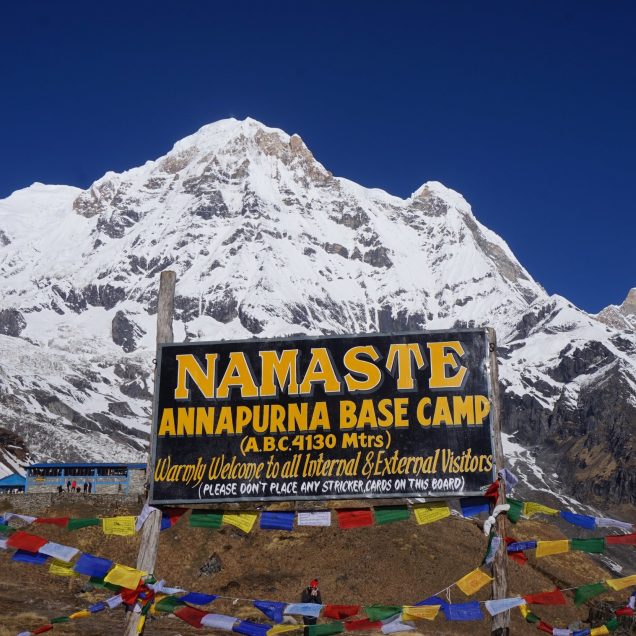
The physical and emotional climax of the journey occurs when the narrow gorge suddenly opens up into the vast, breathtaking Annapurna Sanctuary. After passing the Machhapuchhre Base Camp, the tree line vanishes, replaced by stark alpine scrub and glacial ice. Arriving at the main base camp at 4,130 meters places you in the center of an enormous, 360-degree natural amphitheater. Waking up before dawn in the freezing cold to watch the sunrise hit the summit of Annapurna I, turning the highest peaks into glowing beacons of bright pink and gold while the camp remains in deep shadow, is an unforgettable, life-changing moment that rewards every single step of the exhausting climb.
Sights
Map
Info
The Journey Begins: Gurung Culture and Stone Villages The adventure into the Annapurna Sanctuary typically begins with a short, scenic drive from Pokhara to trailheads such as Nayapul or the increasingly popular jeep drop-off at Jhinu Danda. The initial days of the trek are characterized by steep climbs over endless stone steps, taking you through vibrant agricultural communities. Villages like Ghandruk and Chhomrong are major highlights of the route. These are beautifully preserved, traditional Gurung settlements featuring slate-roofed houses, intricate woodwork, and sweeping views of the deep valleys below. It is here that trekkers first experience the warmth of the local teahouse culture, resting in cozy communal dining rooms heated by central wood stoves, drinking heavily spiced masala tea, and interacting with the incredibly resilient mountain locals who call these steep, terraced slopes home.
The Shifting Landscapes: Through the Modi Khola Gorge As you leave the larger villages behind and push past Chhomrong, the trail drops steeply down to the river before climbing relentlessly upward, closely following the churning, milky-blue waters of the Modi Khola. The geography here is spectacularly dramatic. The river has carved a massive, sheer-sided gorge that acts as the only physical entrance into the sanctuary. Trekking through this valley, you are enveloped by incredibly dense forests of bamboo and towering rhododendrons. Wildlife is abundant in these middle elevations; lucky trekkers might spot Himalayan thar navigating the sheer cliffs or a brilliant array of exotic alpine birds. During the spring, this entire gorge is painted in vibrant reds and pinks as the national flowers bloom across the mountainsides.
Entering the Sanctuary: Machhapuchhre Base Camp As the trail climbs past the small, seasonal settlements of Dovan, Himalaya, and Deurali, the dense tree line abruptly ends. The bamboo gives way to sparse alpine scrub, and the narrow gorge suddenly opens up into a vast, breathtaking glacial valley. This is the official entrance to the Annapurna Sanctuary. The first major milestone here is Machhapuchhre Base Camp (MBC), located at an altitude of 3,700 meters. While climbing Mount Machhapuchhre is strictly forbidden by the Nepalese government because it is considered the sacred home of Lord Shiva, its base camp serves as a critical resting and acclimatization point. Standing at MBC, the sheer vertical walls of the Fishtail peak loom directly overhead, creating an atmosphere of immense scale and profound isolation.
The Ultimate Amphitheater: Arriving at ABC From MBC, it is a steady, awe-inspiring two-hour hike across the alpine meadows and rocky glacial moraines to the final destination: Annapurna Base Camp (4,130m). Arriving here is an intensely emotional experience for most hikers. You are standing directly in the center of an enormous, 360-degree natural amphitheater composed entirely of vertical rock and ancient ice. The colossal, terrifying south face of Annapurna I—the tenth highest mountain in the world and notoriously one of the most dangerous to climb—rises almost vertically in front of you. The absolute pinnacle of the journey occurs the following morning. Trekkers wake up well before dawn, braving the freezing temperatures to watch the sunrise. As the sun breaches the horizon, it hits the highest peaks first, illuminating the summits in brilliant gold while the valley floor remains dark.
Trekking Logistics, Altitude, and Teahouse Culture Compared to the Everest Base Camp trek, ABC is generally considered slightly more accessible. Reaching a maximum altitude of 4,130 meters, the risk of severe Acute Mountain Sickness (AMS) is lower, though proper acclimatization, a slow walking pace, and constant hydration remain absolutely mandatory for safety. The entire route is supported by an excellent, highly developed network of teahouses, meaning trekkers do not need to carry heavy camping gear or food. These family-run mountain lodges provide basic but comfortable beds, heavy blankets, hot showers (for a small fee), and a surprisingly diverse menu ranging from the staple Dal Bhat to hot soups and pasta.
Optimal Seasons for the Sanctuary Timing is highly critical for this trek due to the unique, localized microclimate of the sanctuary. The absolute best windows are the pre-monsoon spring (March to May) and the post-monsoon autumn (September to November). Spring brings slightly warmer temperatures and the spectacular blooming of the rhododendron forests. Autumn offers the crispest, clearest air, ensuring cloudless skies and unobstructed, razor-sharp views of the high peaks. The winter months (December to February) bring extreme cold and a very high risk of avalanches within the narrow Modi Khola gorge, often rendering the sanctuary entirely inaccessible. The summer monsoon (June to August) brings relentless rain, mud, and leeches to the lower trails, making trekking highly uncomfortable.


